

PASET-Rsif Wins 2026 PMI Project of the Year Award
The Partnership for Skills in Applied Sciences, Engineering and Technology’s Regional Scholarship and Innovation Fund (PASET-Rsif) recently earned recognition at the 2026 Project Management Institute (PMI) Kenya Chapter Excellence Awards for its contribution to strengthening Africa’s scientific and research capacity.
PASET-Rsif won the Project of the Year Award in the Above KES 10 Million category recognising excellence in the management and delivery of large-scale projects that demonstrate measurable results and meaningful impact. The award acknowledges the programme’s work in developing the advanced skills and expertise needed to strengthen Africa’s research institutions and help the continent address its development challenges. This award category honors large-scale projects exceeding KES 10 million in budget that demonstrate excellence in translating strategy into execution, innovation, and measurable stakeholder value. The award highlighted the importance of sustained investment, partnerships, and effective project management in building Africa’s scientific and innovation capacity. It further affirms that effective project management can be a powerful driver of development impact. It also recognizes the systems and practices that make complex development initiatives deliver results, including effective teamwork, strategic planning, clear communication, sound financial management, good governance and accountability.
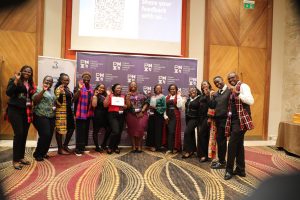
For PASET-Rsif, this recognition reflects the collective efforts of African governments, development partners, universities, researchers and programme teams working towards a common goal: building Africa’s scientific and technological capacity. Being a winner in this Excellence Awards elevates the profile of PASET-Rsif and the International Centre of Insect Physiology and Ecology (icipe) which serves as the programme’s Regional Coordination Unit and inspires the team to always strive for excellent and professional service delivery.
Beyond recognition, the award raises a more important question: what does investment in African science deliver for the continent?
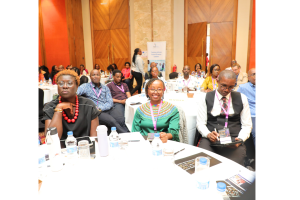
PASET-Rsif’s contribution goes beyond doctoral training; it is helping build scientific expertise and research capacity needed to address African development challenges. Through its investment in African researchers, universities and research and innovation projects, the project is contributing to solutions that can improve food security, advance clean and sustainable energy, strengthen healthcare, support climate resilience and drive technological innovation. These investments have the potential to create economic opportunities, strengthen institutions, improve livelihood, strengthen institutions, and promote more sustainable use of Africa’s resources. Indeed, the award recognises the value of this investment and the growing importance of effective project management in translating resources into measurable development outcomes.
For Africa to realise its scientific ambitions, increasing the number of PhD graduates alone is not enough. The continent also needs skilled researchers, well-equipped universities, and stronger research institutions that can generate knowledge and innovations to address its development needs. It needs research that moves beyond academic achievement to generate practical solutions, create opportunities, strengthen industries, and improve livelihoods. This is the focus of PASET and its flagship programme, Rsif, which aims to develop the expertise needed to advance scientific research and innovation across the continent.
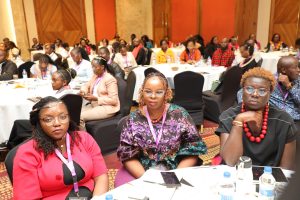
Established in 2013, PASET brings together African governments and development partners to tackle the shortage of highly skilled professionals in applied sciences, engineering and technology. The partnership has grown to include 11 African countries: Benin, Burkina Faso, Côte d’Ivoire, Ethiopia, Ghana, Kenya, Mozambique, Nigeria, Rwanda, Senegal and Tanzania. Through this continental collaboration, PASET seeks to mobilise resources and expertise to strengthen higher education, research, and innovation.
Through Rsif, the vision is translated into investments in doctoral training, research and innovation, institutional capacity building and collaboration between African universities and international scientific institutions. The programme supports doctoral training through its network of African Host Universities (AHUs) and International Partner Institutions (IPIs), creating opportunities for African scholars to access high-quality training, international scientific expertise and research facilities while strengthening research capacity within African institutions.
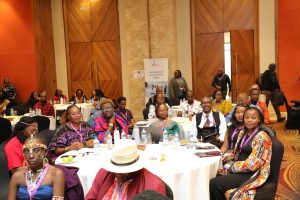
Its implementation is supported by contributions from 9 African governments (Benin, Burkina Faso, Côte d’Ivoire, Ghana, Kenya, Mozambique, Nigeria, Rwanda, Senegal) and development partners, including the World Bank and other international partners like Andrew Carnegie Foundation (formerly Carnergie Corporation). These partnerships are central to mobilising resources, supporting research excellence, and ensuring that investments in advanced scientific training translate into lasting institutional capacity.
The results demonstrate the scale of this investment. The programme has so far awarded 302 PhD scholarships, with women accounting for 37 per cent of the beneficiaries. It has also supported 86 research and innovation grants in nine African countries.
Behind these figures are researchers developing solutions, universities strengthening their research capabilities and emerging scientists contributing to knowledge and innovation across the continent that address challenges facing their communities and countries. These investments are beginning to generate tangible results across sectors critical to Africa’s development.
In agriculture and food security, for example, PASET-Rsif-supported research is advancing innovative approaches to reducing post-harvest losses and protecting food crops. In Côte d’Ivoire’s Université Félix Houphouët-Boigny (UFHB), research into bio fungicides for yam storage has contributed to the development of products that help extend the storage life of harvested yams, addressing a challenge that affects farmers’ incomes, food availability and market access.
A research by Paset-Rsif scholar at University Gaston Berger (UGB), Senegal – Adama Coulibaly for example is focusing on urban mobility- his researching on applying artificial intelligence and drone technologies to explore solutions for more efficient transport planning and traffic management.
In the energy sector, research into energy storage technologies is helping address the challenges of unreliable electricity supply in weak-grid settings. These examples demonstrate how advanced research can respond to practical development needs while opening opportunities for homegrown innovation.
The implications of these projects indicate that research institutions can produce knowledge that informs public policy, support industries to adopt new technologies, create opportunities for skilled employment and strengthen countries’ ability to respond to challenges such as food insecurity, climate change and energy access. They also help African countries build the expertise needed to participate more meaningfully in the global knowledge economy.
As Africa pursues the ambitions of Agenda 2063, the imperative is clear: invest in African talent, strengthen African institutions and empower African researchers to shape the continent’s future. The PMI Kenya Chapter Excellence Award 2026 is not only recognition of PASET-Rsif’s achievements, but also inspiration to continue good leadership and sound management of large science and technology projects and initiatives for the socio-economic transformation of SSA.
Building on this recognition, PASET-Rsif presents a compelling case for greater investment and expanded partnerships. African governments, development partners and the private sector must step forward to scale up this investment, strengthen the continent’s research and innovation ecosystem, and unlock the potential of its scientific talent. The ambition must go beyond training researchers to building a self-sustaining African research enterprise capable of driving economic transformation and delivering homegrown solutions to Africa’s development challenges.