
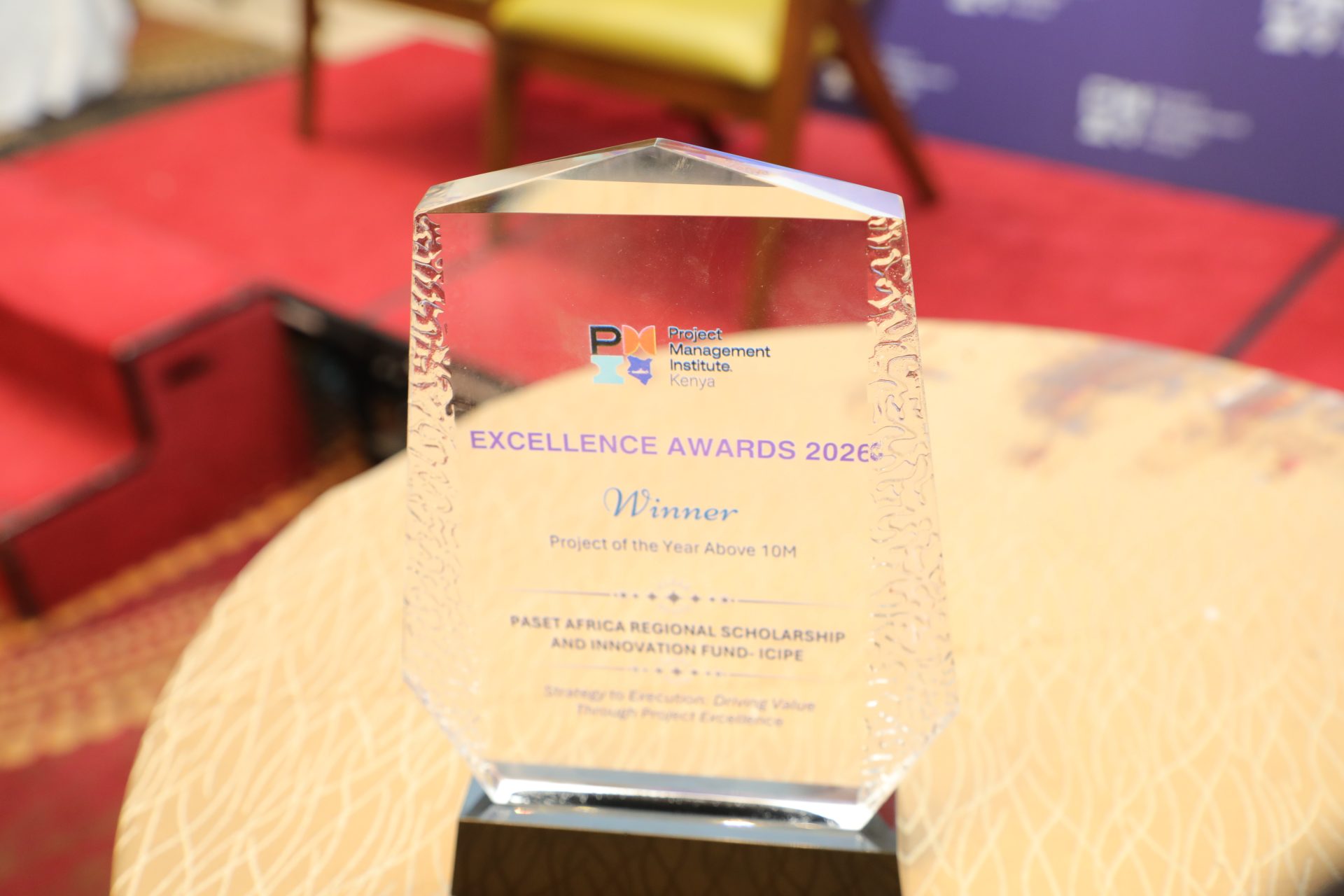
PASET-Rsif Wins 2026 PMI Project of the Year Award

The Partnership for Skills in Applied Sciences, Engineering and Technology’s Regional Scholarship and Innovation Fund (PASET-Rsif) recently earned recognition at the 2026 Project Management Institute (PMI) Kenya Chapter Excellence Awards for its contribution to strengthening Africa’s scientific and research capacity. 

PASET-Rsif won the Project of the Year Award in the Above KES 10 Million category recognising excellence in the management and delivery of large-scale projects that demonstrate measurable results and meaningful impact. The award acknowledges the programme’s work in developing the advanced skills and expertise needed to strengthen Africa’s research institutions and help the continent address its development challenges. This award category honors large-scale projects exceeding KES 10 million in budget that demonstrate excellence in translating strategy into execution, innovation, and measurable stakeholder value. The award highlighted the importance of sustained investment, partnerships, and effective project management in building Africa’s scientific and innovation capacity. It further affirms that effective project management can be a powerful driver of development impact. It also recognizes the systems and practices that make complex development initiatives deliver results, including effective teamwork, strategic planning, clear communication, sound financial management, good governance and accountability. 
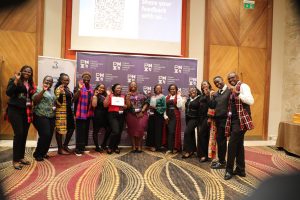
PASET-Rsif team celebrating the award at Ole Sereni hotel in Nairobi.
PASET-Rsif team celebrating the award at Ole Sereni Hotel in Nairobi.

For PASET-Rsif, this recognition reflects the collective efforts of African governments, development partners, universities, researchers and programme teams working towards a common goal: building Africa’s scientific and technological capacity. Being a winner in this Excellence Awards elevates the profile of PASET-Rsif  and the International Centre of Insect Physiology and Ecology (icipe) which serves as the programme’s Regional Coordination Unit and inspires the team to always strive for excellent and professional service delivery.  

Beyond recognition, the award raises a more important question: what does investment in African science deliver for the continent? 
Dr Everlyn Nguku Head of Integrated Capacity Building Platform at icipe (centre) with capacity building officers Vivian Atieno and Bonface Nyanga at Ole Sereni Hotel where the award ceremony was taking place. Photo/Janet Otieno

PASET-Rsif’s contribution goes beyond doctoral training; it is helping build scientific expertise and research capacity needed to address African development challenges. Through its investment in African researchers, universities and research and innovation projects, the project is contributing to solutions that can improve food security, advance clean and sustainable energy, strengthen healthcare, support climate resilience and drive technological innovation. These investments have the potential to create economic opportunities, strengthen institutions, improve livelihood, strengthen institutions, and promote more sustainable use of Africa’s resources. Indeed, the award recognises the value of this investment and the growing importance of effective project management in translating resources into measurable development outcomes. 

For Africa to realise its scientific ambitions, increasing the number of PhD graduates alone is not enough. The continent also needs skilled researchers, well-equipped universities, and stronger research institutions that can generate knowledge and innovations to address its development needs. It needs research that moves beyond academic achievement to generate practical solutions, create opportunities, strengthen industries, and improve livelihoods. This is the focus of PASET and its flagship programme, Rsif, which aims to develop the expertise needed to advance scientific research and innovation across the continent. 
Cynthia Orang'o, Research and Innovation Grant Officer at the International Centre of Insect Physiology and Ecology (icipe) (Centre) with capacity building officers vivian Atieno and Jeritah Maungu at the event. Photo/Janet Otieno
Cynthia Orang’o, Research and Innovation Grant Officer at the International Centre of Insect Physiology and Ecology (icipe) (Centre) with capacity building officers vivian Atieno and Jeritah Maungu at the event. Photo/Janet Otieno

Established in 2013, PASET brings together African governments and development partners to tackle the shortage of highly skilled professionals in applied sciences, engineering and technology. The partnership has grown to include 11 African countries: Benin, Burkina Faso, Côte d’Ivoire, Ethiopia, Ghana, Kenya, Mozambique, Nigeria, Rwanda, Senegal and Tanzania. Through this continental collaboration, PASET seeks to mobilise resources and expertise to strengthen higher education, research, and innovation. 

Through Rsif, the vision is translated into investments in doctoral training, research and innovation, institutional capacity building and collaboration between African universities and international scientific institutions. The programme supports doctoral training through its network of African Host Universities (AHUs) and International Partner Institutions (IPIs), creating opportunities for African scholars to access high-quality training, international scientific expertise and research facilities while strengthening research capacity within African institutions. 
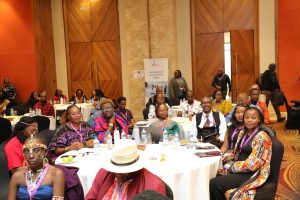
PASET-Rsif team keenly following the proceedings at the event. Photo/Janet Otieno

Its implementation is supported by contributions from 9 African governments (Benin, Burkina Faso, Côte d’Ivoire, Ghana, Kenya, Mozambique, Nigeria, Rwanda, Senegal) and development partners, including the World Bank and other international partners like Andrew Carnegie Foundation (formerly Carnergie Corporation). These partnerships are central to mobilising resources, supporting research excellence, and ensuring that investments in advanced scientific training translate into lasting institutional capacity. 

The results demonstrate the scale of this investment. The programme has so far awarded 302 PhD scholarships, with women accounting for 37 per cent of the beneficiaries. It has also supported 86 research and innovation grants in nine African countries.  

Behind these figures are researchers developing solutions, universities strengthening their research capabilities and emerging scientists contributing to knowledge and innovation across the continent that address challenges facing their communities and countries. These investments are beginning to generate tangible results across sectors critical to Africa’s development. 

In agriculture and food security, for example, PASET-Rsif-supported research is advancing innovative approaches to reducing post-harvest losses and protecting food crops. In Côte d’Ivoire’s Université Félix Houphouët-Boigny (UFHB), research into bio fungicides for yam storage has contributed to the development of products that help extend the storage life of harvested yams, addressing a challenge that affects farmers’ incomes, food availability and market access. 

A research by Paset-Rsif scholar at University Gaston Berger (UGB), Senegal – Adama Coulibaly for example is focusing on urban mobility- his researching on applying artificial intelligence and drone technologies to explore solutions for more efficient transport planning and traffic management.  

In the energy sector, research into energy storage technologies is helping address the challenges of unreliable electricity supply in weak-grid settings. These examples demonstrate how advanced research can respond to practical development needs while opening opportunities for homegrown innovation. 

The implications of these projects indicate that research institutions can produce knowledge that informs public policy, support industries to adopt new technologies, create opportunities for skilled employment and strengthen countries’ ability to respond to challenges such as food insecurity, climate change and energy access. They also help African countries build the expertise needed to participate more meaningfully in the global knowledge economy. 

As Africa pursues the ambitions of Agenda 2063, the imperative is clear: invest in African talent, strengthen African institutions and empower African researchers to shape the continent’s future. The PMI Kenya Chapter Excellence Award 2026 is not only recognition of PASET-Rsif’s achievements, but also inspiration to continue good leadership and sound management of large science and technology projects and initiatives for the socio-economic transformation of SSA.  

Building on this recognition, PASET-Rsif presents a compelling case for greater investment and expanded partnerships. African governments, development partners and the private sector must step forward to scale up this investment, strengthen the continent’s research and innovation ecosystem, and unlock the potential of its scientific talent. The ambition must go beyond training researchers to building a self-sustaining African research enterprise capable of driving economic transformation and delivering homegrown solutions to Africa’s development challenges. 


Why industry relevant PhD research is becoming popular

“Africa’s industrial transformation will not be driven by imported solutions alone – it will be powered by researchers/scientists trained to solve local challenges.” For Prof Adewale Dosunmu, a Nigerian Petroleum Engineer and mentor with more than three decades of experience, this is not just a vision for the future—it is a necessity for the continent’s sustainable development.  He has also been in academia for more than 30 years and has supervised several graduate students at the master’s and doctoral levels.

In an interview with the Partnership for Skills in Applied Sciences, Engineering and Technology-Regional Scholarship and Innovation Fund (PASET-Rsif), Prof Dosunmu reflects on the role of graduate education in building Africa’s scientific and technological capacity, the importance of industry-relevant research, and how programmes such as PASET-Rsif managed by the International Centre of Insect Physiology and Ecology (icipe) are nurturing a new generation of scientists equipped to develop homegrown solutions to Africa’s most pressing challenges.

From advancing innovation to strengthening local expertise, he shares why investing in research talent today is key to shaping Africa’s industrial future.

Q: Can you share an example of how investing in advanced skills—such as technical training, research capacity, or innovation—has directly improved productivity, reduced costs, or enabled your company to develop new products or services?

A: You know the petroleum industry is a high technology industry exploiting fossil fuel, which is essential for a wide range of activities globally. It is a major determinant in the global economy as it drives transportation and energy, which are crucial to international economic development. Graduate students in African universities must be encouraged to undertake research relevant to solving problems in the oil and gas industry. The undergraduates, most of the time, don’t have sufficient capacity in terms of the technical requirements, the quantum of academic work required to be able to handle graduate work at that level. So, MSc and PhD students are best equipped to undertake advanced work, particularly based on their thesis and dissertations, which if properly handled, can contribute to the knowledge gap in the industry at the local and international levels. Our graduate research must be aimed at solving social and industry problems that add value to society rather than ending up on research shelves.

The industry should be encouraged to collaborate with the universities so that the outcomes of the research work coming out of the universities will have a direct impact on their operations.  Professors and their students are best suited to work on problems of the industry because they have a good understanding of local problems, and with the correct approach, they can drive research that aids the development of the continent.

Prof Adewale Dosunmu. Photo/Courtesy
Prof Adewale Dosunmu.

Collaboration between the industry, the universities and the government is essential, where students can earn their degrees, and also contribute to the development of the industry and the economic transformation in their own countries as well as the continent. We see this model in different parts of the world, such as the US, UK, Canada and some other countries in the West. In fact, in some countries,  graduate students don’t pay fees as they are funded by grants provided for industry-relevant research. Professors obtain grants and based on the grants, graduate students work on projects defined by industry or the government.  At the conclusion of the research, the industry takes the results for deployment in their operations, while the student gets the credit for their master’s or doctoral thesis. So, I think this model is very important as it provides excellent collaboration between industry and academia. On a personal level, I participated in this kind of collaboration. For about 8 years, I  occupied a Professorial chair at the University of Port Harcourt, the Shell Professorial Chair. This appointment allowed me to collaborate with the industry and to understand what their problems were. And these problems fell in line with my own research areas of interest. Before this appointment, I was a Distinguished Lecturer of the Society of Petroleum Engineers International. I travelled to different parts of the world discussing aspects of wellbore stability, geomechanics, and solving drilling and well engineering problems.  In the oil industry, drilling oil and gas wells is a major investment in terms of the expenditure made by the company. It is through the well that we can produce oil and gas. So with this opportunity for collaboration, I was able to understand what their problems were and working with my master’s and doctoral students, we were able to offer solutions. And some of those solutions are still in use as of today. The company found the result to be very beneficial in terms of cost reduction and efficiency in their operations. Secondly, we were able to address field problems at the local level and provide solutions to their local and global problems.  And quite a few of the students, of course, who worked with me are now employed by the companies in the oil industry in Nigeria and abroad. Since the petroleum sector is a global industry, I now work with several operating companies in different parts of Nigeria, Europe and the US.

Q: If you were advising governments and development partners like the World Bank, what would you say is the economic cost of underinvesting in higher education and advanced skills—and what impact could stronger investment have on job creation and Africa’s industrial and economic transformation?

A:
Well, underinvestment means that we are not taking advantage of the very bright students that we have, and that means we’ll continue to import technology from outside Africa, because we have a lot of very bright students who, if properly guided and motivated can do very useful work. So we would fail if we do not collaborate and invest in them as a government and as an industry. Investing in PhD education would help us solve our problems without necessarily importing some of these solutions that we’re looking for. In my own case, we found that the solutions that were proposed initially for some of the problems of the industry were solutions that were derived in other geological environments, which did not have the same kind of geological setting as we have in Africa.

Q: What role do universities and PhD-level research play in solving real industry problems in your sector, and how could stronger partnerships between higher education and industry accelerate innovation, strengthen local value chains, and reduce reliance on imported expertise?

A: In terms of employment, the good thing is that once these students are properly trained, the industry will be willing to employ them, because the industry is looking for bright people. In fact, part of the complaint of the industry is that when these students come on board, for the first one or two years, they are training them. But if the students have been part of a process that provides solutions to the problems that industry has, then, as soon as he/she graduates, he gets into industry and hit the ground running. Even the industry will come looking for these graduates to solve their problems with a view to making profit. Once we can show them that this can be done, certainly it creates opportunities for our young graduates, which translates to self-reliance and better economic productivity while reducing dependence on foreign labour and technology.